Version control for things you print
Git for 3D.
Every change to a part, drawn on the part. Branch it, merge it, sign it, print it.
Sign in with your email. Every account gets a workshop; Pro turns on the history.
See what changed
Added material in green. Removed in red. On the part, not in a spreadsheet.
Git diffs lines of text, and a model has none — so every revision of a part has been a file called bracket_final_v2_REAL.stl and a guess. Here are three versions of a shelf bracket: the second thickened the back plate and added a gusset at each end, the third opened the mounting holes up for M5 screws. Kiln draws each difference on the model and says how much material moved.
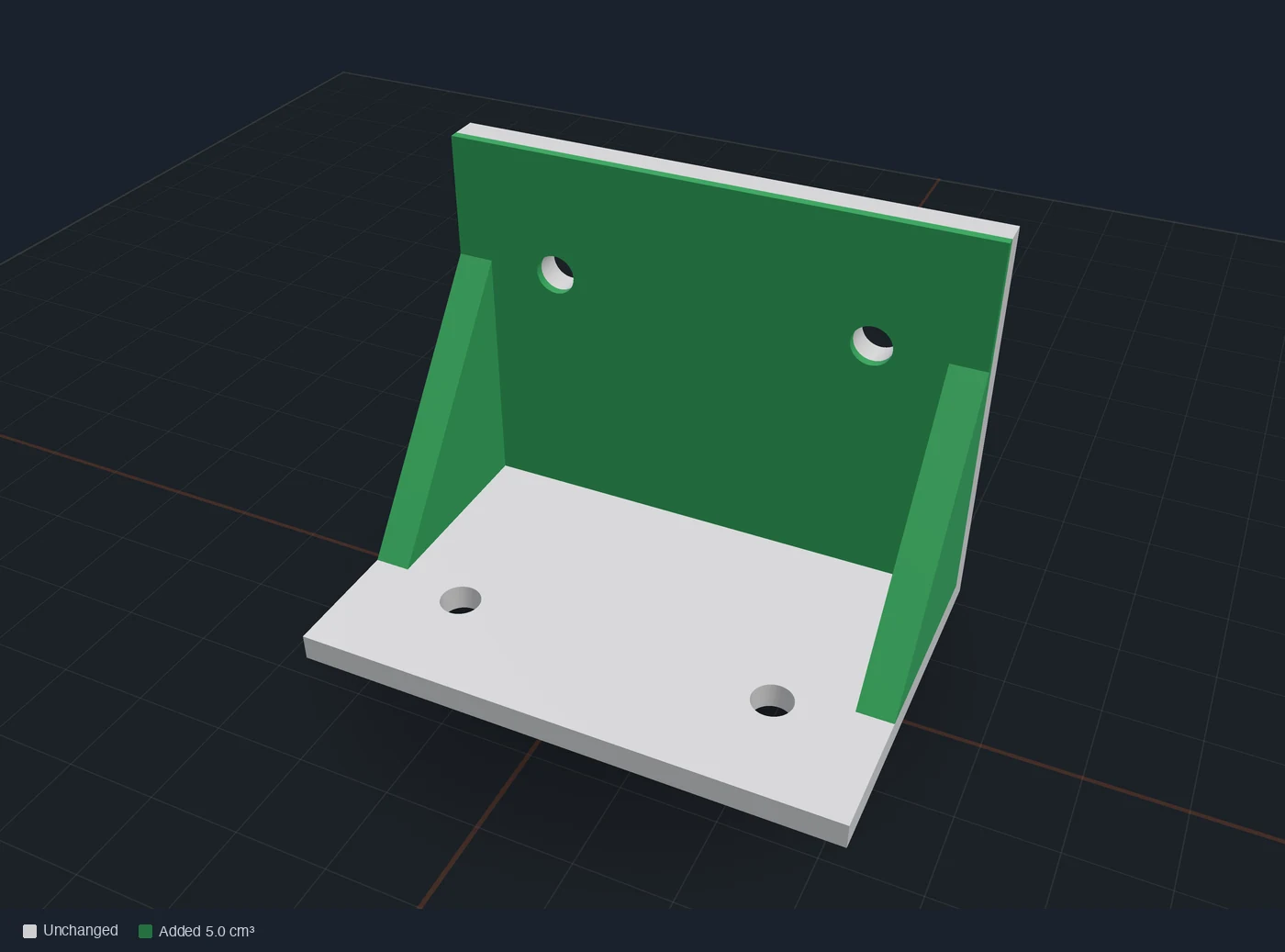
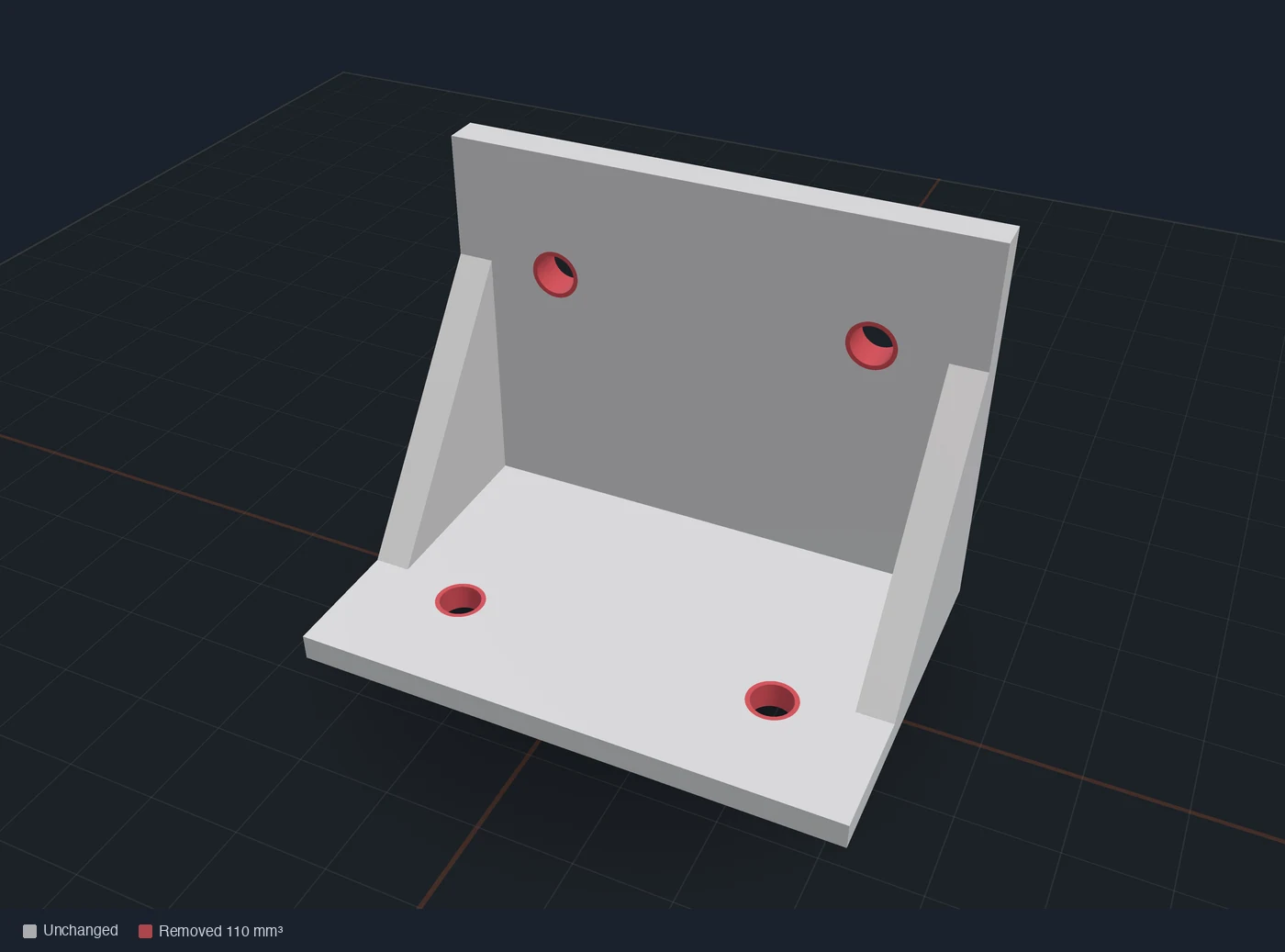
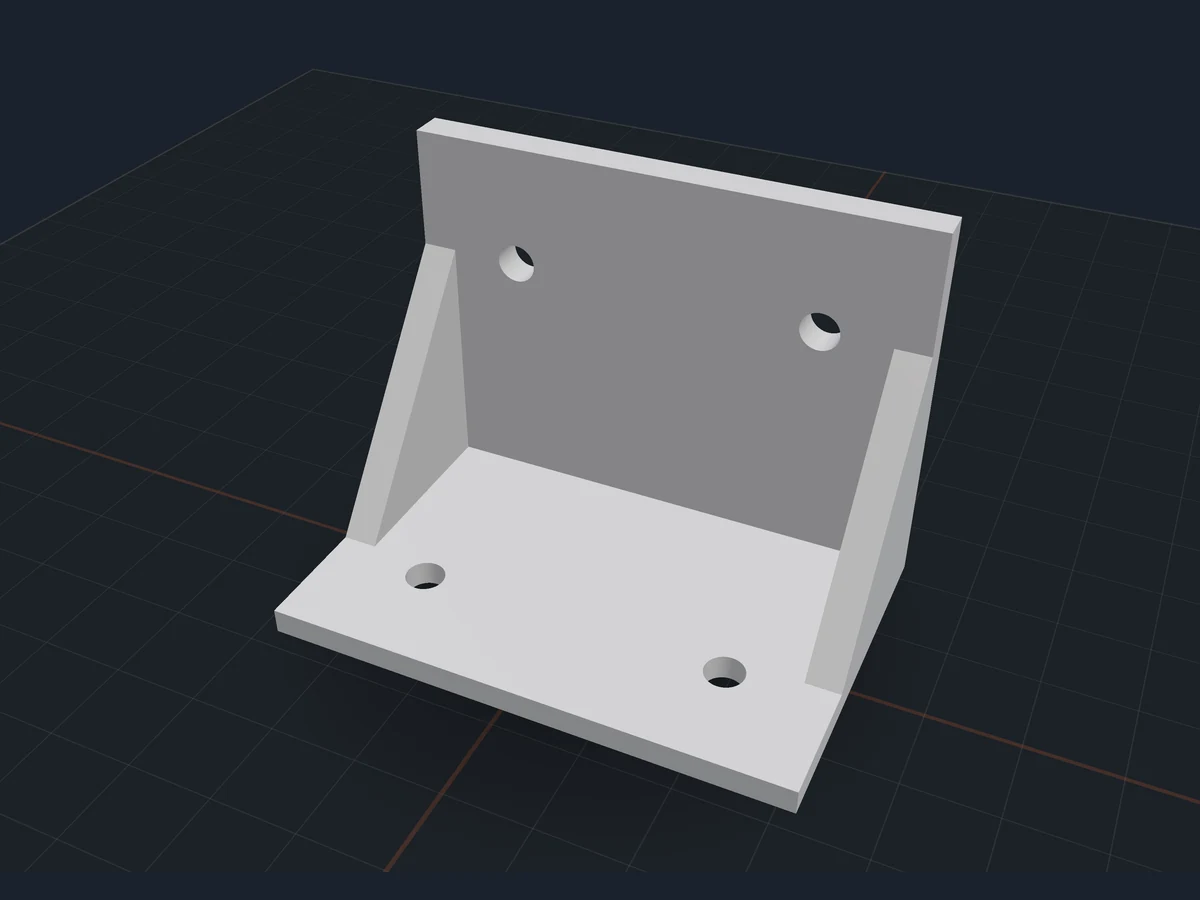
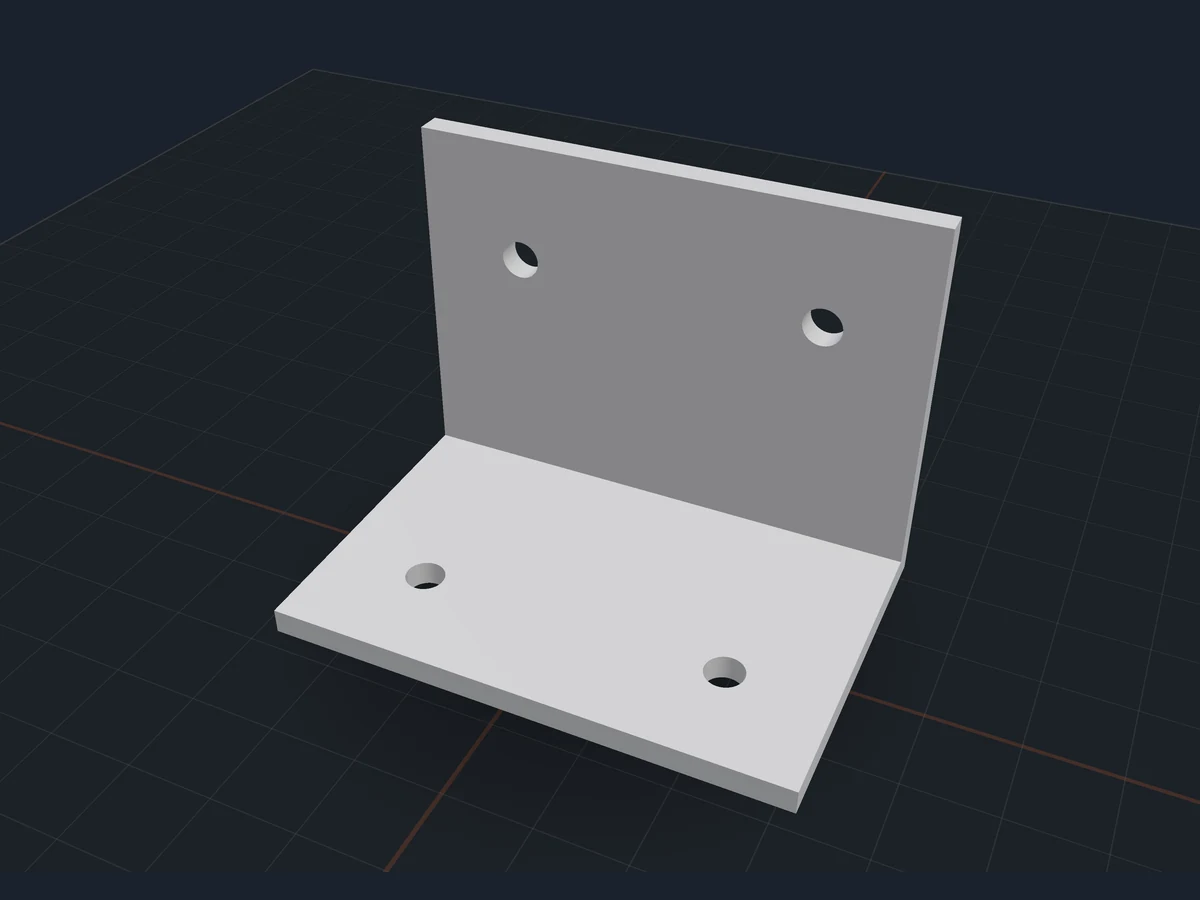
Every plan compares two versions side by side or by dragging between them, with the numbers. Pro draws what changed on the part.
Every version carries its numbers
The history reads like a changelog, measured.
Each version records what you said about it and what the geometry says about it: its size, and how much changed since the one before. The numbers below are what Kiln measured for the bracket above.
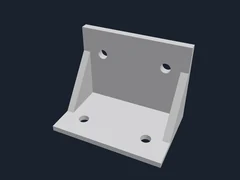 v3Mounting holes 4.5 → 5.5 mm, for M5 screws−110 mm³ (−0.6%)
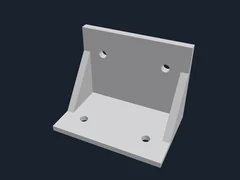 v2Back plate to 4 mm, a gusset at each end+5.0 cm³ (+34.0%)
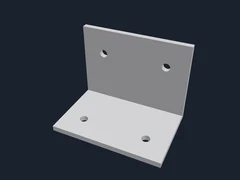 v1Shelf bracket, 3 mm walls14.6 cm³ · 60×40×45 mm
A volume is stated only for a closed solid. A mesh with holes in its surface encloses nothing, so Kiln shows its size and leaves the volume out rather than print a number it cannot stand behind.
Branch, merge, cherry-pick
Try the risky idea without losing the one that works.
Branch a design, change it, print it. Merge what printed best back into main. Cherry-pick one modification from a branch you otherwise abandon. Merges are three-way and read the geometry: when both branches change the same feature — a pocket, a height — Kiln names the conflict instead of quietly picking a winner.
- Designs The part itself: every save is a version, every variation a branch.
- Decorations Logos, textures and photo embossing, versioned and released like a brand-asset library.
- Features Reusable mechanical parts — a bracket, a chamfer, a pocket, a hole — with their own history.
Review
Comments pinned to a spot on the model.
“This wall looks thin” means nothing without the wall. A comment in Kiln is pinned to the part of the mesh it is about — a set of faces, an edge, a point — on the version you were looking at, and it is a thread you reply to, resolve and reopen. Propose a branch’s change as a pull request; approval gates decide what it takes to merge into a protected branch.
- Pinned threads A comment lives on the faces it is about, not in a chat log beside the file.
- Pull requests Propose a branch’s change; reviewers see what moved, drawn on the part, before it merges.
- Approval gates A protected branch merges only with the reviews it requires, from the roles it names. A request for changes blocks it.
Pinned comments and pull requests are Pro. Approval gates and reviewers from your team are Business.
Prove
Sign a release. Prove later that nothing changed.
A release is signed over what Kiln measured of the geometry at signing time, so a certificate vouches for the mesh it was issued for and no other. Anyone with the file can check it on the verify page: whether it was made with Kiln, by whom, and whether the bytes are untouched. Enterprise adds the approver’s name, role and decision inside the signature.
Prints on the record
A print is filed under the version it came from.
Kiln traces a print back through the file it sent to the version that made it, so how the print went is recorded against that exact version — not against a file name. “Which revision was the one that worked?” gets its answer from the record, not from anyone’s memory.
Free keeps a linear history and tells you what changed in numbers. Pro is Git for 3D: branches, merges, the diff drawn on the part, pinned comments, pull requests, signed releases and private cloud sync. Business adds approval gates and team review across operators; Enterprise adds named-approver e-signatures and audit export. Local-first throughout — your history lives on your machine.